Eustachian Tube Dysfunction: Why Your Ears Feel Blocked and What to Do About It
- Vyas Prasad
- May 24
- 6 min read

Updated: 4 days ago
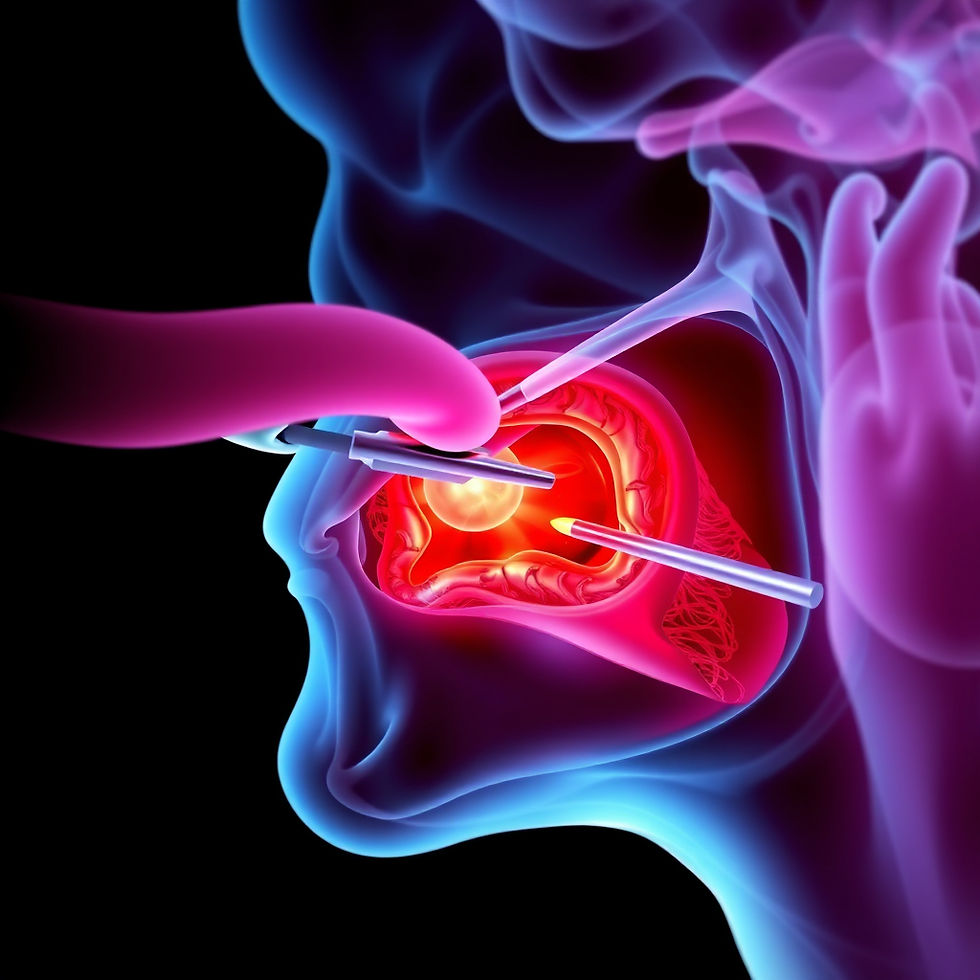
The Eustachian tube connects the middle ear to the back of the nose, equalising pressure and draining fluid
When it fails to open, the result is blocked, muffled, or pressured ears — especially noticeable during flights or after a cold
This is one of the most common ENT complaints
Treatment options range from nasal sprays to balloon dilation of the Eustachian tube

That feeling of blocked, muffled, or pressured ears — as if you have just come down from altitude or surfaced too quickly from a pool — is one of the most common complaints I hear in ENT clinic. In many cases, the cause is Eustachian tube dysfunction (ETD): a condition in which the tube connecting the middle ear to the back of the nose fails to open and close properly, disrupting pressure regulation in the ear.
ETD is often dismissed as trivial, but for patients who experience it chronically it can be genuinely distressing — affecting hearing, creating a constant awareness of their ears, and in some cases causing significant pain or contributing to more serious middle ear problems.
This article explains what the Eustachian tube does, why it goes wrong, and how ETD is assessed and managed.
What Is the Eustachian Tube?
The Eustachian tube is a narrow channel — roughly three to four centimetres long — that runs from the middle ear (the space behind the eardrum) down to the back of the nose (the nasopharynx). It performs two essential functions:
Pressure equalisation — it opens briefly during swallowing and yawning to equalise the pressure between the middle ear and the outside environment. This is the mechanism behind the "pop" that clears your ears on a plane or in a lift.
Drainage — it allows any fluid that accumulates in the middle ear to drain away into the throat.
When the Eustachian tube does not open adequately — or, less commonly, remains open when it should be closed — the consequences are felt directly in the ear.
Types of Eustachian Tube Dysfunction
Obstructive ETD
The most common type. The tube fails to open properly, creating negative pressure in the middle ear. The eardrum is drawn inward, producing a sensation of blockage, fullness, muffled hearing, and sometimes crackling or popping with swallowing.
Prolonged obstructive ETD can lead to fluid accumulation in the middle ear (glue ear), progressive eardrum retraction, and in severe cases, a destructive condition called cholesteatoma.
Patulous ETD
A less common condition in which the Eustachian tube remains open rather than closing between swallows. This causes the patient to hear their own voice resonating unusually loudly — a symptom called autophony — as well as hearing their own breathing and heartbeat. The sensation often improves paradoxically when lying down, which increases blood flow and temporarily closes the tube. Patulous ETD is frequently misdiagnosed as it is less familiar to non-specialist clinicians.
What Causes ETD?
The most common causes of obstructive ETD include:
Nasal and sinus conditions — allergic rhinitis, chronic sinusitis, and nasal polyps cause inflammation that can impair Eustachian tube function. In Singapore's climate, house dust mite allergy is particularly prevalent and a very common driver of ETD.
Upper respiratory tract infections — viral colds cause mucosal swelling that temporarily blocks the Eustachian tube. Most people experience this as blocked ears during a cold. In most cases it resolves as the infection clears; in some, it persists.
Adenoid enlargement — in children and occasionally adults, enlarged adenoids physically obstruct the Eustachian tube opening in the nasopharynx.
Barotrauma — pressure changes during air travel, diving, or rapid altitude changes can overwhelm the tube's ability to equalise pressure, causing a sudden onset of blocked ears and sometimes eardrum damage.
Laryngopharyngeal reflux — stomach contents refluxing into the throat and nasopharynx can inflame the Eustachian tube opening.
Anatomical factors — some individuals simply have a narrower or less functional tube from birth.
Patulous ETD is associated with significant weight loss, pregnancy, and prolonged use of nasal decongestant sprays.
Symptoms of ETD
Obstructive ETD:
Blocked or full feeling in one or both ears
Muffled or reduced hearing
Crackling, popping, or clicking in the ears — particularly with swallowing, yawning, or nose blowing
A sensation of fluid in the ear
Ear pain — particularly during pressure changes on flights
Tinnitus
Imbalance or mild dizziness
Patulous ETD:
Hearing your own voice too loudly (autophony)
Hearing your own breathing in the ear
A hollow or echoing quality to your own voice
Symptoms that improve when lying down or with a head-low position
How Is ETD Diagnosed?
Diagnosis is based on clinical assessment. I take a detailed history of ear and nasal symptoms, duration, triggers, and any associated conditions.
Examination includes otoscopy to assess the eardrum — in obstructive ETD, the eardrum may appear retracted, dull, or have fluid visible behind it. Tympanometry provides objective information about middle ear pressure and eardrum mobility.
Nasal endoscopy allows direct visualisation of the nasopharynx and the Eustachian tube opening, as well as assessment of the adenoids and any inflammatory or structural contributors.
Treatment of ETD
Treatment is directed at the underlying cause wherever one can be identified.
Medical Management
Nasal steroid sprays — the cornerstone of treatment when ETD is driven by allergic rhinitis or nasal inflammation. These reduce mucosal swelling in the nasal passages and around the Eustachian tube opening. They need to be used correctly and consistently — improvement may take several weeks.
Antihistamines — for ETD related to allergic rhinitis with significant nasal symptoms. Oral non-sedating antihistamines or antihistamine nasal sprays may be used alongside steroid sprays.
Saline nasal irrigation — regular nasal rinsing helps clear inflammatory mediators and allergens from the nasal passages and can support ETD management as an adjunct to other treatments.
Treating laryngopharyngeal reflux — where reflux is identified as a contributing factor, proton pump inhibitors and dietary and lifestyle modification are prescribed.
Decongestants — short-term use of nasal decongestant sprays during acute episodes such as flying with a cold can help, but prolonged use causes rebound congestion and should be avoided.
Autoinflation
The Valsalva manoeuvre (gently blowing with nose pinched and mouth closed) and the use of autoinflation devices — small nasal balloons that force air up the Eustachian tube — can help open the tube and equalise pressure. Evidence for autoinflation is strongest in children with glue ear but it is used in adults too.
Surgical Options
Grommet insertion — placing a small ventilation tube through the eardrum provides immediate relief of negative middle ear pressure and allows fluid to drain. It is effective for ETD complicated by glue ear or significant eardrum retraction. Grommets are temporary — they typically extrude naturally after six to twelve months.
Balloon Eustachian tuboplasty — a newer procedure in which a small balloon catheter is passed into the Eustachian tube under endoscopic guidance and inflated briefly to dilate the tube. Evidence for this procedure continues to develop. It may be appropriate for selected patients with chronic obstructive ETD who have not responded to medical management.
Adenoidectomy — removal of the adenoids in patients where adenoid enlargement is obstructing the Eustachian tube opening. Particularly relevant in children but occasionally performed in adults.
Addressing nasal pathology — if significant nasal polyps, deviated septum, or chronic sinusitis is contributing to ETD, treating these conditions surgically may improve Eustachian tube function as a secondary benefit.
Flying With ETD
Air travel is a common trigger for ETD symptoms, as the rapid pressure changes during descent are difficult for a poorly functioning Eustachian tube to manage. Practical advice for flying with ETD:
Use a nasal decongestant spray thirty minutes before descent
Chew gum or swallow frequently during descent
Perform the Valsalva manoeuvre gently during descent — pinch the nose and blow gently
Avoid flying during an active upper respiratory infection if possible
Specialised filtered earplugs (flight plugs) slow the rate of pressure change in the ear canal and can reduce discomfort
When Should I Seek Assessment?
I would recommend ENT assessment for Eustachian tube dysfunction when:
Symptoms have persisted beyond two to three weeks without a clear cause such as a cold
There is associated hearing loss
The ear feels consistently blocked on one side without explanation
Symptoms are significantly affecting daily life, sleep, or the ability to travel
There has been no improvement with over-the-counter treatments
Persistent one-sided nasal or ear symptoms in particular always warrant assessment to exclude less common causes.
Book an Assessment
If blocked ears, ear pressure, or muffled hearing are affecting you, an ENT assessment can identify the cause and guide appropriate treatment.
Dr Vyas Prasad consults at Absolute ENT, Camden Medical Centre, 1 Orchard Boulevard, #09-08, Singapore. Contact the clinic by WhatsApp on +65 8060 8079 or by email at camden.mmc@gmail.com.



Comments