Earwax Removal in Singapore: When to See a Specialist and What Microsuction Involves

Updated: May 28
Earwax only requires removal when it is causing symptoms such as blocked hearing, tinnitus, earache, or dizziness. Microsuction — performed under direct visualisation using a microscope or endoscope — is the safest method of earwax removal and is significantly safer than ear syringing, particularly for patients with a history of ear surgery or perforated eardrum.
Earwax only requires removal when causing symptoms such as blocked hearing, tinnitus, earache, or dizziness
Microsuction — performed under direct visualisation — is the safest removal method, significantly safer than ear syringing
It is particularly important for patients with a history of ear surgery or perforated eardrum
This post explains when to see a specialist and what to expect during the procedure
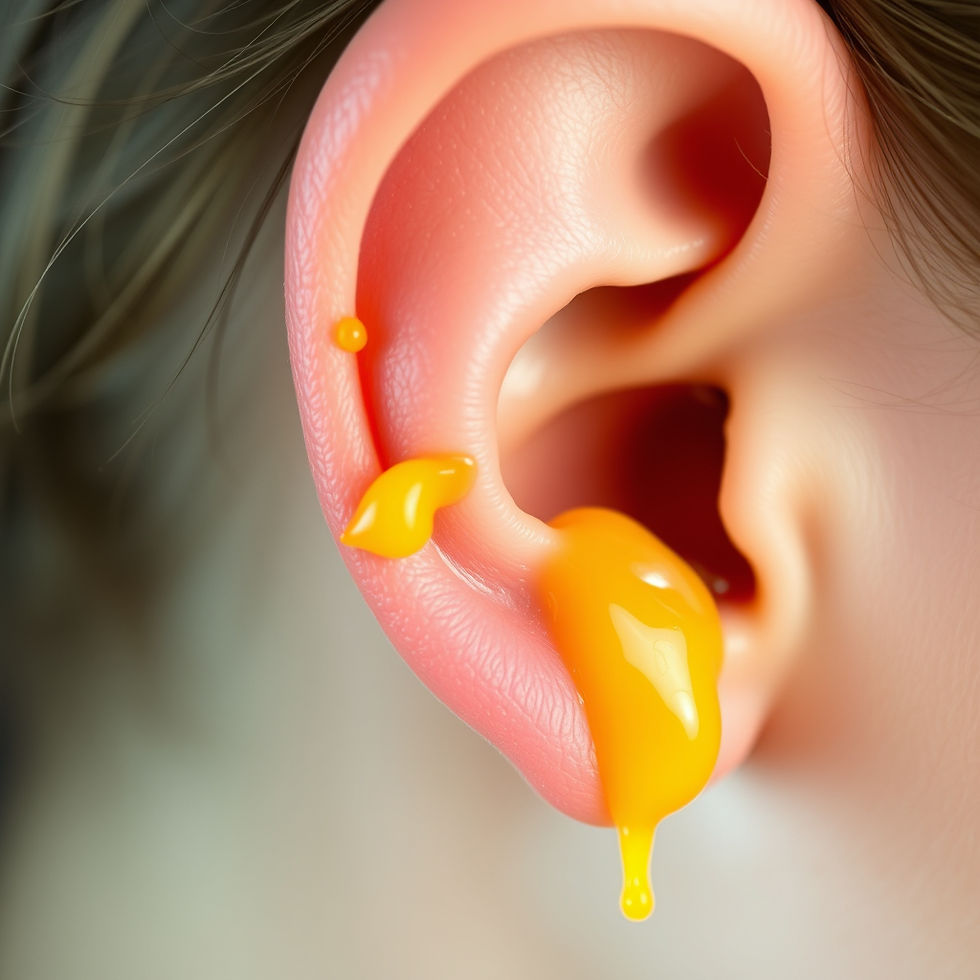
There is a tendency to dismiss earwax as a minor nuisance — something to be dealt with at home with cotton buds, ear drops, or a trip to the pharmacy. In most cases, the ear manages itself well and no intervention is needed at all. But when wax does accumulate to the point of causing symptoms, the method of removal matters considerably. This article explains when earwax becomes a clinical problem, why certain removal methods are safer than others, and what to expect from microsuction at a specialist ENT clinic.
What Is Earwax and Why Does It Exist?
Earwax — cerumen — is not a sign of poor hygiene. It is produced by glands in the outer ear canal and serves a genuine protective function: it traps dust, dead skin cells, and small particles before they reach the eardrum, and it has mild antibacterial properties that help maintain a healthy ear canal environment.
In most people, the ear is self-cleaning. The skin of the ear canal migrates slowly outward, carrying wax with it. Jaw movements during eating and talking assist this process. Wax that reaches the outer portion of the canal simply falls away naturally.
Problems arise when this self-cleaning mechanism is disrupted — by ear canal anatomy, repeated water exposure, hearing aid use, or, ironically, by attempts to clean the ear that push wax deeper rather than removing it.
When Does Earwax Become a Problem?
Not all earwax requires treatment. Many patients are surprised to learn that wax visible on examination is not necessarily causing their symptoms, and that treating it may not resolve what they came in for.
Earwax is worth treating when it is causing one or more of the following:
Blocked or muffled hearing — a sensation of fullness or reduced sound clarity, often more noticeable in one ear
Tinnitus — a ringing, buzzing, or humming sound that may worsen when wax occludes the canal
Earache or discomfort — particularly when wax has hardened against the canal wall or eardrum
Itching — persistent irritation within the ear canal
Dizziness — in some cases, significant wax impaction can affect the pressure environment of the canal
If you are not experiencing any of these symptoms, there is generally no reason to remove earwax, even if it is visible.
Why Cotton Buds Should Not Be Used
Cotton buds are one of the most common causes of earwax impaction I see in clinic. Rather than removing wax, they compact it further into the canal — pushing it toward the eardrum where it becomes harder to remove and more likely to cause symptoms. They also carry a risk of ear canal abrasion or, in rare cases, eardrum perforation.
The instruction to avoid inserting anything smaller than an elbow into the ear is not a cliché. It reflects the genuine risk of self-instrumentation.
Methods of Earwax Removal
Ear Drops
Over-the-counter softening drops — olive oil, sodium bicarbonate, or commercially prepared cerumenolytics — can be helpful for mild wax accumulation. They work by softening the wax so it migrates out of the canal more easily. They are best used for one to two weeks before a clinic appointment if significant wax is present, as softer wax is easier and safer to remove.
Drops alone are not sufficient to remove impacted wax in most cases.
Ear Syringing and Irrigation
Syringing — flushing the ear canal with water — was the traditional method of earwax removal and remains widely used in GP settings. Water is directed into the canal to dislodge and wash out wax.
Syringing is contraindicated in patients with a perforated eardrum, a history of ear surgery, recurrent ear infections, or grommets. It also carries a risk of introducing water into the middle ear if an unrecognised perforation is present, and can cause a post-irrigation otitis externa (outer ear infection) in susceptible individuals.
For straightforward wax in a healthy ear, syringing is generally safe. For patients with any of the above risk factors, it should be avoided.
Microsuction
Microsuction is the method I use in clinic and is widely regarded as the safest and most effective technique for earwax removal. It involves using a fine suction device to remove wax under direct visualisation — either through a microscope or an endoscope — without introducing any water into the ear canal.
The key advantages over syringing are:
Direct visualisation throughout — the clinician can see exactly what they are doing at all times, reducing the risk of trauma to the canal or eardrum
No water — safe for patients with perforations, previous ear surgery, grommets, or a history of recurrent ear infections
Immediate — there is no need to soften wax beforehand in most cases, although soft wax is easier to remove
Precise — wax can be removed in a controlled manner even from the area immediately adjacent to the eardrum
I use both microscope and endoscope depending on the anatomy of the canal and the nature and position of the wax. The endoscope provides a wider field of view and is particularly useful for tortuous canals, while the microscope offers excellent magnification for delicate work close to the eardrum.
What to Expect During Microsuction
The procedure is performed with you seated or lying comfortably. A speculum is placed gently at the entrance of the ear canal, and the suction device is introduced under direct vision.
Most patients find the procedure well tolerated. The suction device produces a noticeable noise — a high-pitched hiss — which some patients find startling at first but quickly become accustomed to. Occasional mild discomfort may be felt if wax is adherent to the canal wall, but significant pain is uncommon.
The procedure typically takes five to fifteen minutes per ear depending on the volume and consistency of the wax. In most cases, hearing improvement is immediate and noticeable.
Who Should Have Microsuction Rather Than Syringing?
I would recommend microsuction over syringing for any patient with:
A known or suspected eardrum perforation
Previous ear surgery (including mastoidectomy or myringoplasty)
Grommets (ventilation tubes) in place
A history of recurrent otitis externa or otitis media
Diabetes (increased infection risk from irrigation)
Very hard or deeply impacted wax
Wax that has not responded to drops and irrigation
For straightforward wax in a patient with no risk factors, either method is reasonable — but microsuction remains the safer and more controlled option regardless of history.
How Often Should Ears Be Cleaned?
For most people, never. The ear is self-cleaning and routine cleaning is unnecessary and counterproductive.
Some individuals do produce more wax than average, or have ear canal anatomy that makes natural clearance difficult. These patients may benefit from periodic microsuction — typically once or twice a year — rather than repeated home treatment. Hearing aid users often fall into this category, as the device sits within the canal and disrupts the natural outward migration of wax.
If you find yourself needing repeated ear cleaning, it is worth having an ENT assessment to understand why wax is accumulating and whether anything can be done to reduce the frequency.
When Earwax Is Not the Cause
One of the most important aspects of assessment in clinic is recognising when earwax is present but not responsible for the patient's symptoms. I regularly see patients who have been treated repeatedly for earwax when the underlying problem is a middle ear effusion, sensorineural hearing loss, or Eustachian tube dysfunction.
Removing wax in these cases may produce a small improvement, but the underlying condition remains untreated. A thorough ENT assessment — including otoscopy, tuning fork tests, and hearing assessment where indicated — helps ensure that the right problem is being addressed.
Concerned About Earwax or Hearing?
If you are experiencing blocked hearing, ear discomfort, or tinnitus that you suspect may be related to earwax, a clinic assessment can clarify the cause and provide safe, effective treatment.
Microsuction is available at Absolute ENT, Camden Medical Centre, 1 Orchard Boulevard, Singapore. Appointments can be arranged by WhatsApp on +65 8060 8079 or by email at camden.mmc@gmail.com.



Read it and learned something
Saw Dr Prasad for earwax
Had keratosis obturans which Dr Vyas treated - worse than earwax
Had wax removed and Dr Vyas was very professional
Good article and easy to understand