Thyroid Surgery: Management Risks and Benefits

Updated: May 28
Thyroid surgery — thyroidectomy — is recommended for thyroid nodules that are malignant or suspicious on biopsy, significantly enlarged goitres causing compression symptoms, or hyperthyroidism not controlled by medication. Performed by an experienced ENT head and neck surgeon, the risks to the recurrent laryngeal nerve and parathyroid glands are minimised, and most patients are discharged within one to two days.
Thyroid surgery is one of the most commonly performed operations in head and neck surgery
Key risks include temporary or permanent changes to voice (recurrent laryngeal nerve injury) and low calcium levels (parathyroid disturbance)
In experienced hands, complication rates are low and most patients recover well
The decision between observation, medication, and surgery depends on the diagnosis, nodule characteristics, and patient preference
If you have been told you need thyroid surgery, your first questions are probably practical ones: What exactly will happen? How long will recovery take? What are the real risks — and how likely are they? Will my voice be affected?
This guide answers those questions honestly and in detail. It is written for patients in Singapore who are considering or have been recommended thyroid surgery, and want to understand the procedure before meeting their surgeon.
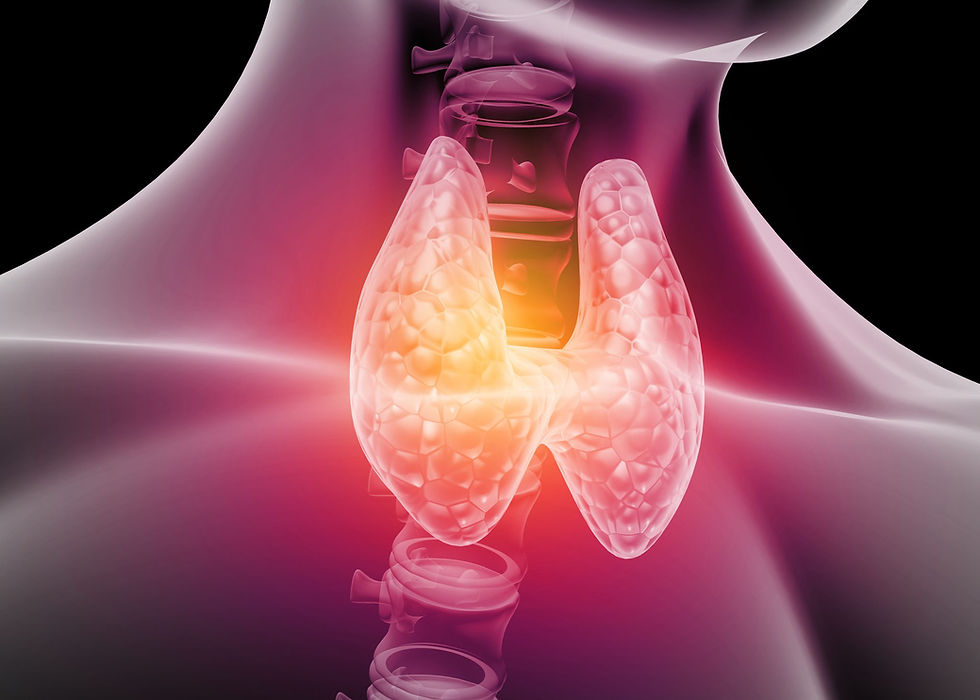
When is thyroid surgery recommended?
Thyroid surgery (thyroidectomy) is not a first resort. It is recommended when there is a clear clinical reason — and your surgeon should be able to explain exactly why it applies to your situation. The main indications are:
Confirmed or suspected thyroid cancer Surgery is the primary treatment for thyroid cancer. Depending on the type and stage, this may involve removing one lobe or the entire thyroid gland, sometimes with removal of nearby lymph nodes.
A thyroid nodule requiring diagnostic removal When a biopsy (FNAC) returns an indeterminate result — particularly Bethesda category III or IV — surgery may be the only way to obtain a definitive diagnosis. The nodule is removed and examined in full by a pathologist.
A symptomatic goitre An enlarged thyroid that is causing compression of the airway or oesophagus — leading to difficulty breathing, swallowing, or a sensation of pressure in the neck — often requires surgical removal.
Hyperthyroidism not controlled by medication For patients with Graves' disease or a toxic nodular goitre who prefer a permanent solution, or who are not suitable for radioactive iodine, thyroidectomy is a definitive treatment option.
A growing or cosmetically significant nodule Even in the absence of cancer, a nodule that is enlarging progressively or causing visible distortion of the neck may warrant surgical removal.
Types of thyroid surgery
Hemithyroidectomy (lobectomy)
Removal of one lobe of the thyroid gland. This is recommended for:
A single nodule confined to one lobe
Indeterminate biopsy results requiring full pathological assessment
Low-risk differentiated thyroid cancer confined to one side
The main advantage is that thyroid function is often preserved — many patients do not need long-term hormone replacement after a hemithyroidectomy, though this is monitored with blood tests in the months following surgery.
Total thyroidectomy
Removal of the entire thyroid gland. This is recommended for:
Thyroid cancer where the whole gland needs to be cleared
Bilateral disease (nodules or disease affecting both lobes)
Large goitres
Graves' disease
After a total thyroidectomy, lifelong thyroid hormone replacement (levothyroxine, taken as a once-daily tablet) is required. This is very well tolerated once the correct dose is established.
The incision and approach
In the vast majority of cases, thyroid surgery is performed through a single incision placed within a natural skin crease in the lower neck — sometimes called a Kocher incision. It is typically five to eight centimetres in length. With careful technique and good wound care, this heals to a fine, flat scar that fades significantly over six to twelve months and is often barely noticeable after a year.
Endoscopic and robotic approaches exist but are not the standard of care in Singapore for most thyroid conditions. For the majority of patients, an open approach via the neck incision provides the best combination of safety, visibility, and access.
What happens on the day of surgery
Thyroid surgery is performed under general anaesthetic. You will be asked to fast from midnight the night before. Here is what to expect:
Before the operation A final pre-operative assessment is completed — including review of your blood tests, imaging, and any medications. A member of the surgical team will mark the site and confirm your consent.
During surgery The operation typically takes 60 to 90 minutes for a hemithyroidectomy and 90 to 120 minutes for a total thyroidectomy. The surgeon works carefully around the critical structures in the neck — particularly the recurrent laryngeal nerves and the parathyroid glands — while removing the affected thyroid tissue.
Intraoperative nerve monitoring Throughout thyroid surgery, continuous intraoperative nerve monitoring is used to assess the function of the recurrent laryngeal nerves in real time. Electrodes placed at the vocal folds give the surgeon live feedback if the nerve is being stimulated or is at risk — providing an important additional layer of protection for the voice.
After the operation You will wake up in the recovery room and be transferred to the ward once stable. A small drain is sometimes placed in the neck to prevent fluid accumulation — this is usually removed the following morning. Most patients are comfortable and able to eat and drink within a few hours of surgery.
Understanding the risks — honestly
All surgery carries risk. What matters is understanding which risks are common, which are rare, and what is done to minimise them. Here is an honest breakdown for thyroid surgery.
Voice change — the most important risk
The recurrent laryngeal nerve (RLN) runs in close proximity to the thyroid gland on both sides of the neck and controls the movement of the vocal folds. This is the risk patients most commonly ask about, and rightly so.
Temporary voice change is relatively common — occurring in around 5–10% of patients — due to swelling, bruising, or handling of the nerve during surgery. This almost always resolves within days to weeks as the swelling settles.
Permanent voice change from RLN injury is much less common — in experienced hands, the risk is generally quoted at less than 1–2% for a unilateral injury. A permanently injured nerve can cause a hoarse, weak, or breathy voice, and in rare cases (with bilateral injury) may affect breathing.
Two factors reduce this risk significantly:
Surgical experience and familiarity with the anatomy of this nerve
Intraoperative nerve monitoring, which provides real-time feedback throughout the procedure
As a subspecialty laryngologist, Dr Prasad has an unusually detailed understanding of the vocal fold anatomy and function. If any voice change does occur after surgery, assessment and management — including laryngoscopy and voice rehabilitation — can be arranged directly within the same practice.
Low calcium — a common temporary issue after total thyroidectomy
The parathyroid glands — four small glands that sit behind the thyroid and regulate calcium levels — can be temporarily disturbed during total thyroidectomy, even when they are carefully preserved. This leads to a temporary drop in calcium levels, causing tingling or numbness around the mouth and in the fingertips.
Temporary low calcium occurs in around 20–30% of patients after total thyroidectomy and is managed with calcium and vitamin D supplements, which are usually tapered and stopped over a few weeks as the parathyroid glands recover.
Permanent hypoparathyroidism — where the parathyroid glands do not recover — is less common, occurring in around 1–3% of cases in experienced hands. Long-term calcium and vitamin D supplementation is required if this occurs.
Calcium levels are routinely monitored after total thyroidectomy and supplements are started promptly if needed.
Bleeding
Post-operative bleeding (haematoma) is uncommon — occurring in roughly 1–2% of cases — but is the most time-critical complication of thyroid surgery. A significant haematoma in the neck can compress the airway and requires urgent return to the operating theatre. This is one of the reasons patients are monitored in hospital overnight after thyroid surgery.
Infection
Wound infection after thyroid surgery is rare — less than 1% of cases. The neck has an excellent blood supply, which promotes healing. If infection does occur, it is usually managed with antibiotics.
Anaesthetic risks
General anaesthetic carries a small risk of its own, including reactions to medications, breathing complications, and nausea. Your anaesthetist will discuss these with you before surgery.
Benefits of thyroid surgery
Alongside the risks, it is important to be clear about what surgery achieves:
Definitive treatment for thyroid cancer — surgical removal is the cornerstone of curative treatment for papillary, follicular, and medullary thyroid cancer
Accurate diagnosis — for indeterminate nodules, surgery provides the only definitive pathological answer
Relief of compressive symptoms — removal of a large goitre can dramatically improve breathing, swallowing, and comfort
Permanent resolution of hyperthyroidism — for patients with Graves' disease or toxic nodular goitre, thyroidectomy provides a definitive, lasting cure
Peace of mind — for patients with a growing or suspicious nodule, removal eliminates the uncertainty of ongoing surveillance
Recovery — what to realistically expect
In hospital
Most patients undergoing thyroid surgery stay one night in hospital. After a straightforward hemithyroidectomy, some patients go home the same day. After total thyroidectomy, an overnight stay allows monitoring of calcium levels and the wound.
The first two weeks
The neck wound is usually covered with a simple dressing or adhesive strips
Mild neck discomfort and stiffness is normal and manageable with regular paracetamol
Voice may sound slightly different initially — this is expected and usually settles quickly
Swallowing may feel mildly uncomfortable for a few days
Most patients are able to return to desk work within one to two weeks
Returning to normal activities
Driving: typically after one to two weeks, once comfortable turning the neck
Exercise: light walking from day one; more strenuous exercise after two to four weeks
Heavy lifting: avoid for four weeks
Scar care
Once the wound has fully healed (usually two to three weeks), silicone gel or sheets can be applied to the scar to help it soften and fade. Sun protection over the scar is important for the first year.
After total thyroidectomy
Thyroid hormone tablets (levothyroxine) are started promptly after surgery. Blood tests are done at six weeks to check TSH and free T4 levels and adjust the dose. Most patients feel well once the correct dose is established, which may take a few months of fine-tuning.
Preparing for surgery — what you need to do
At your pre-operative appointment
Bring a full list of your current medications, including supplements and over-the-counter drugs
Blood thinners (aspirin, warfarin, clopidogrel, novel anticoagulants) will usually need to be paused before surgery — your surgeon will advise on timing
Inform your surgeon of any previous neck surgery, radiation, or known voice problems
In the days before surgery
Fast from midnight the night before (no food, milk, or juice — clear water is usually permitted up to two hours before)
Arrange for someone to collect you from hospital and stay with you on the first night at home
Prepare loose, comfortable clothing that does not require pulling over the head
Medications to discuss with your surgeon
If you are on antithyroid medications (carbimazole, propylthiouracil) for hyperthyroidism, do not stop these without advice — your thyroid function needs to be adequately controlled before surgery
Beta-blockers for heart rate control in hyperthyroidism are usually continued up to and including the morning of surgery
Frequently asked questions
How do I know if I really need surgery, or if I can just monitor the nodule? This depends on what the ultrasound and biopsy show. Benign nodules with no concerning features can usually be monitored safely with periodic ultrasound. Surgery is recommended when a nodule is confirmed or suspected malignant, is causing symptoms, or is growing significantly despite observation. Your surgeon should give you a clear, evidence-based recommendation for your specific situation — not a one-size-fits-all answer.
Will I need to take medication for the rest of my life? After hemithyroidectomy, most patients retain sufficient thyroid function and do not need replacement — though this is confirmed with blood tests. After total thyroidectomy, lifelong levothyroxine is required. This is a once-daily tablet that is straightforward to manage once the dose is established.
How long before I can talk normally after surgery? Most patients notice their voice sounds slightly different or tires more easily in the first week or two. This is usually due to swelling and settles quickly. Significant or persistent voice change should be assessed with laryngoscopy. Because Dr Prasad is also a laryngologist, this assessment can be done directly within the practice.
What does the scar look like? The incision is placed in a natural neck crease and is typically five to eight centimetres long. With good wound care it heals to a fine, pale scar that becomes much less visible over six to twelve months. Many patients find it barely noticeable after a year.
Can I have thyroid surgery if I am pregnant? Thyroid surgery during pregnancy is generally avoided unless there is a compelling reason — such as rapidly growing thyroid cancer or severe airway compromise. If surgery is necessary, the second trimester is the safest window. This is a decision made carefully in conjunction with your obstetrician and endocrinologist.
What if I need surgery on both sides? Total thyroidectomy removes both lobes in a single operation. Completing the surgery in one sitting avoids a second anaesthetic and allows a single, coordinated recovery. The risks — particularly to the nerves on both sides — are managed with intraoperative nerve monitoring throughout.
Arranging a consultation in Singapore
If you have been recommended thyroid surgery and want a specialist opinion, or if you are considering your options after a thyroid nodule or cancer diagnosis, Dr Vyas Prasad offers thorough, evidence-based assessment at Camden Medical Centre, 1 Orchard Boulevard, Singapore.
With over 25 years of surgical ehttps://wa.me/6580608079xperience and subspecialty training in laryngology, Dr Prasad brings particular expertise to the protection of the voice nerve during thyroid surgery — and to the management of any voice concerns that arise after the procedure.
Considering thyroid surgery in Singapore? Book a consultation with Dr Vyas Prasad to discuss your options and what to expect.



Had my thyroid removed by Dr Vyas - no issues
have read this twice now - very useful
Great to read such a well written article
useful infomation by an expert no less
Well written