Tonsillitis and Tonsillectomy in Singapore — When Is Surgery the Right Answer?

Updated: May 28
Tonsillitis is usually viral and self-limiting, but recurrent bacterial episodes significantly affecting quality of life — typically 7 or more per year — is an indication for surgery
Enlarged tonsils causing obstructive sleep apnoea in children are an equally important surgical indication
Tonsillectomy resolves sleep-disordered breathing in the majority of paediatric cases
This post explains the criteria for surgery and what the procedure involves
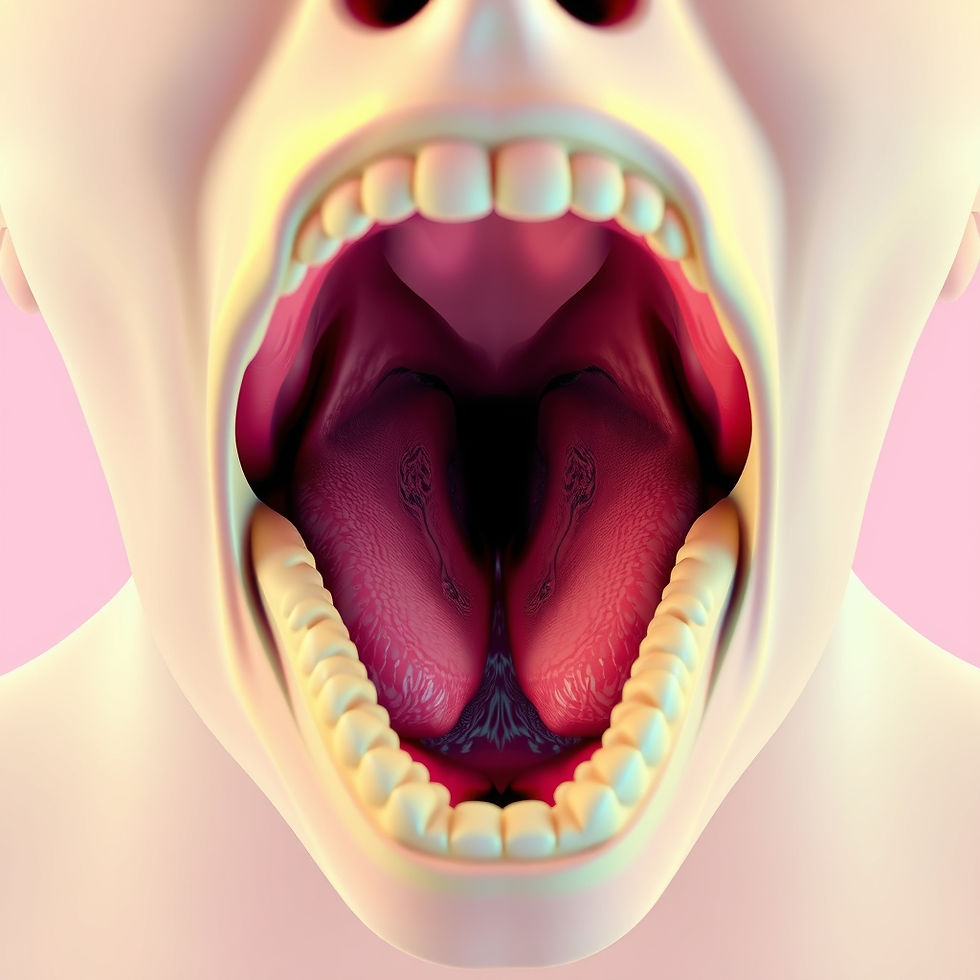
Tonsillitis is most commonly viral and self-limiting, but recurrent bacterial tonsillitis significantly affecting quality of life — typically seven or more episodes in a year — is a recognised indication for tonsillectomy. In children, enlarged tonsils causing obstructive sleep apnoea are an equally important reason for surgery, which resolves sleep-disordered breathing in the majority of cases.
Tonsillitis is one of the most common reasons for ENT referral in both children and adults. Most people have experienced a sore throat severe enough to make swallowing painful, and for the majority this is a self-limiting viral illness that resolves within a week. But for a significant minority — particularly children who suffer repeated episodes — tonsillitis becomes a recurring cycle that disrupts schooling, work, and family life, and raises the question of whether removing the tonsils is the right long-term solution.
This article explains what tonsillitis is, when it warrants specialist assessment, what the criteria for tonsillectomy are, and what the operation involves.
What Are the Tonsils?
The tonsils are two oval-shaped pads of lymphoid tissue sitting at the back of the throat, one on each side. They are part of the immune system's first line of defence — positioned to sample bacteria and viruses entering through the mouth and nose, and mount an immune response. The adenoids, sitting at the back of the nasal passage, are similar lymphoid tissue and are often discussed alongside the tonsils.
In childhood, the tonsils are relatively large and immunologically active. They tend to shrink with age as the immune system matures. In some children — and occasionally adults — they remain persistently enlarged or become repeatedly infected, causing significant problems.
What Is Tonsillitis?
Tonsillitis is inflammation of the tonsils, most commonly caused by a viral or bacterial infection.
Viral tonsillitis accounts for the majority of cases. The most common culprits are rhinovirus, adenovirus, and the Epstein-Barr virus (which causes infectious mononucleosis, or glandular fever). Viral tonsillitis does not respond to antibiotics and is managed with rest, adequate fluids, and pain relief.
Bacterial tonsillitis is most commonly caused by Group A beta-haemolytic Streptococcus (Strep A) — the same organism responsible for strep throat. Bacterial tonsillitis may respond to a course of antibiotics, most commonly penicillin or amoxicillin. It is important to note that amoxicillin should be avoided if glandular fever is suspected, as it can cause a widespread rash.
In practice, it is often difficult to distinguish viral from bacterial tonsillitis on clinical grounds alone. A throat swab can help, though results take time and management decisions are often made on the basis of clinical features.
Symptoms of Acute Tonsillitis
Severe sore throat, often worse on one side
Painful swallowing — in severe cases making eating and drinking difficult
Fever and chills
Swollen, tender lymph nodes in the neck
Bad breath
Muffled or changed voice
White or yellow patches or exudate on the tonsils
Headache and general malaise
Glandular Fever (Infectious Mononucleosis)
Glandular fever — caused by the Epstein-Barr virus — deserves specific mention as it frequently presents as a severe tonsillitis and is commonly misdiagnosed as bacterial tonsillitis. Features that suggest glandular fever include:
Unusually severe or prolonged sore throat
Very enlarged tonsils, sometimes meeting in the midline
Significant cervical lymphadenopathy
Generalised fatigue and malaise out of proportion to the throat symptoms
Splenomegaly (enlargement of the spleen) in some cases
A Monospot test or Paul-Bunnell test can help confirm the diagnosis. Patients with confirmed glandular fever should avoid contact sport and heavy lifting for four to six weeks due to the risk of splenic rupture.
Peritonsillar Abscess (Quinsy)
A peritonsillar abscess — or quinsy — is a collection of pus that forms between the tonsil and the surrounding tissue. It is one of the most common deep neck infections and usually develops as a complication of acute tonsillitis.
Symptoms include:
Severe, worsening sore throat, typically worse on one side
Difficulty opening the mouth (trismus)
A muffled, "hot potato" voice
Drooling
Fever
A quinsy requires prompt drainage — either by needle aspiration or incision — alongside intravenous antibiotics. It is usually managed as an emergency in hospital. Patients who develop a quinsy have an increased risk of recurrence and are often considered for tonsillectomy following recovery.
When Should You See an ENT Specialist for Tonsillitis?
A GP is the appropriate first point of contact for most episodes of acute tonsillitis. ENT referral is appropriate when:
Tonsillitis is recurrent — meeting the frequency criteria discussed below
There is a suspected or confirmed peritonsillar abscess
One tonsil is significantly larger than the other — asymmetric tonsillar enlargement should be assessed to exclude a tonsillar tumour
There is concern about airway compromise from very enlarged tonsils
Tonsillitis is associated with obstructive sleep apnoea or significant snoring
Symptoms are prolonged or atypical
Recurrent Tonsillitis — The Criteria for Surgery
The decision to proceed with tonsillectomy for recurrent tonsillitis is based on established frequency criteria. The most widely referenced are the Paradise criteria, which define recurrent tonsillitis as:
7 or more episodes of tonsillitis in the preceding year, or
5 or more episodes per year for two consecutive years, or
3 or more episodes per year for three consecutive years
Each episode should be documented and should include at least one of the following: fever, cervical lymphadenopathy, tonsillar exudate, or a positive Strep A test.
These are guidelines rather than absolute thresholds. In practice, the impact of recurrent tonsillitis on quality of life — missed school, missed work, repeated courses of antibiotics, disrupted family life — is an equally important consideration. A child who has had five documented episodes in a year, each requiring a week off school, is a reasonable candidate for tonsillectomy even if the strict numerical threshold has not been met.
Other Indications for Tonsillectomy
Beyond recurrent infection, tonsillectomy may be recommended for:
Obstructive Sleep Apnoea and Sleep-Disordered Breathing
Enlarged tonsils are one of the most common causes of obstructive sleep apnoea in children. When tonsils and adenoids are significantly enlarged and contributing to sleep-disordered breathing — snoring, witnessed pauses in breathing, restless sleep, daytime fatigue — adenotonsillectomy is often the first-line surgical treatment and resolves sleep apnoea in the majority of children.
Peritonsillar Abscess
A history of quinsy — particularly recurrent quinsy — is a strong indication for tonsillectomy. The operation is usually performed six to eight weeks after the acute episode has resolved.
Asymmetric Tonsillar Enlargement
When one tonsil is significantly larger than the other in an adult, specialist assessment is required to exclude a tonsillar tumour. Unilateral tonsillectomy with histological examination of the specimen is sometimes performed to obtain a tissue diagnosis.
Chronic Tonsillitis
Some patients have persistently enlarged, cryptic tonsils with chronic bad breath, chronic sore throat, and tonsil stones (tonsilloliths) — debris that accumulates in the tonsillar crypts. When this significantly affects quality of life and does not respond to conservative management, tonsillectomy provides a definitive solution.
The Tonsillectomy Operation
How Is It Performed?
Tonsillectomy is performed under general anaesthetic. The tonsils are removed through the mouth — there are no external incisions. The operation typically takes 20 to 30 minutes.
Several techniques are used, including cold steel dissection (the traditional method), diathermy (using heat to cut and seal blood vessels), and coblation (a low-temperature radiofrequency technique). The choice of technique depends on surgeon preference and training — evidence on post-operative pain and bleeding rates between techniques is mixed.
What to Expect After Surgery
Pain is the most significant post-operative issue. Throat pain after tonsillectomy is typically worst on days three to five, as the tonsillar beds develop a white slough during healing. Pain is managed with regular paracetamol and ibuprofen — it is important to take painkillers regularly rather than waiting for pain to become severe.
Diet — soft foods and adequate fluids are essential throughout recovery. Eating and drinking regularly, even when swallowing is uncomfortable, helps maintain hydration and is believed to reduce the risk of post-operative bleeding by keeping the tonsillar beds clean.
Recovery time — most adults require ten to fourteen days off work. Children typically return to school after one to two weeks. Strenuous activity and contact sport should be avoided for two weeks.
Post-operative bleeding is the most important complication of tonsillectomy and occurs in around 3-5% of cases. Primary bleeding occurs within 24 hours of surgery; secondary bleeding occurs most commonly between days five and ten when the slough separates. Any bleeding after tonsillectomy — even small amounts — should be taken seriously. Patients should attend the nearest emergency department immediately.
Tonsil Stones (Tonsilloliths)
Tonsil stones are calcified deposits of food debris, dead cells, and bacteria that accumulate in the crypts (pockets) of the tonsil surface. They appear as small white or yellowish lumps on the tonsils and are a common cause of persistent bad breath and a foreign body sensation in the throat.
Most tonsil stones cause no serious problems and can be dislodged with water irrigation or a cotton bud at home. For patients with recurrent, symptomatic tonsil stones causing significant bad breath or discomfort, tonsillectomy provides a definitive solution.
Adenoids — When Do They Need Removing?
The adenoids are a pad of lymphoid tissue at the back of the nasal passage. In children, enlarged adenoids can cause:
Nasal obstruction and mouth breathing
Snoring and sleep-disordered breathing
Recurrent ear infections and glue ear (by obstructing the Eustachian tube opening)
Recurrent sinusitis
Adenoidectomy — removal of the adenoids — is often performed alongside tonsillectomy (adenotonsillectomy) when both are contributing to symptoms. It may also be performed alone, particularly when adenoid enlargement is contributing to glue ear or nasal obstruction without significant tonsillar problems.
Frequently Asked Questions
At what age can children have a tonsillectomy?
Tonsillectomy is routinely performed in children from around 18 months of age when there is a clear clinical indication. There is no upper age limit — adults benefit from tonsillectomy for appropriate indications as well, though recovery tends to be longer than in children.
Will removing the tonsils affect my child's immunity?
This is one of the most common concerns parents raise. The evidence is reassuring — tonsillectomy does not significantly impair immune function. The tonsils are just one small part of a large and distributed immune system, and their role diminishes with age. Children who have frequent tonsillitis are not protected from infection by their tonsils — quite the opposite.
How long does it take to recover from tonsillectomy as an adult?
Adult recovery is typically ten to fourteen days, with the worst pain usually between days three and seven. It is longer and more painful than in children, and adequate pain management and fluid intake are particularly important.
Can tonsillitis be treated without surgery?
Yes — the majority of episodes of tonsillitis resolve with supportive management or antibiotics where indicated. Surgery is only considered when tonsillitis is recurrent, causing significant quality of life impact, or when there are other specific indications as described above.
Is tonsillectomy covered by Medisave in Singapore?
Tonsillectomy performed for medical indications — including recurrent tonsillitis, obstructive sleep apnoea, and peritonsillar abscess — is generally claimable under Medisave and most integrated shield plans. The clinic team can assist with pre-authorisation documentation.
Book a Tonsil Assessment
If you or your child are experiencing recurrent tonsillitis, significant snoring, or other tonsil-related symptoms, a specialist ENT assessment can clarify whether surgery is the right next step.
Dr Vyas Prasad consults at Absolute ENT, Camden Medical Centre, 1 Orchard Boulevard, #09-08, Singapore. Contact the clinic by WhatsApp on +65 8060 8079 or by email at camden.mmc@gmail.com.




Thanks for sharing
Thank you doc for sharing this blog
Excellent article
Had surgery and Dr Vyas was amazing!!
Had op and great success thanks to bc Doc Vyas!